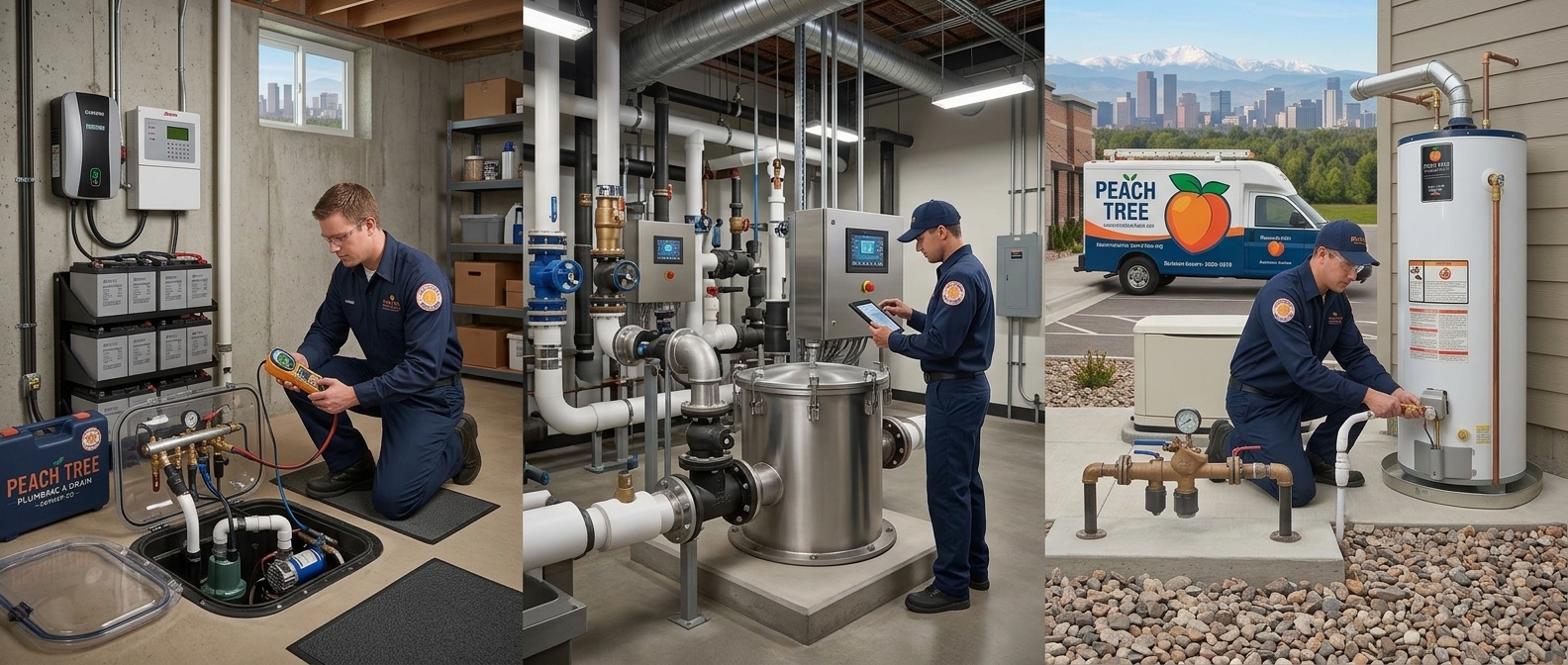
Sump Pumps & Ejector Pumps in Denver: Installation, Sizing, and Maintenance. The Master Plumbers Guide
Living and operating property along Colorado's Front Range comes with unique subterranean water challenges. Between heavy spring thaws off the Rockies, sudden high-volume summer downpours, and the shifting clay soil structures across the Denver metro area, sub-grade water management isn't a luxury—it is an absolute structural necessity.
Whether you manage a commercial facility or own a residential home with a finished basement, a failing pump can lead to thousands of dollars in water damage, hazardous black mold growth, and severe foundation stress. As a master plumber who has spent decades diagnosing groundwater intrusion, I wrote this master guide to walk you through everything you need to know about professional sump pump installation, system mechanics, ejector pump vs sump pump distinctions, battery backups, and preventative maintenance.
1. Mechanics 101: How Do Sump Pumps Work?
A common question property owners ask us is, "how do sump pumps work?"
At its core, a sump system is a groundwater evacuation network designed to keep your foundation dry:
- Perimeter Drain Tiles (French Drains): Perforated pipes buried outside or under your basement floor collect subterranean groundwater and channel it into a basin (the sump pit).
- The Sump Pit & Basin: As groundwater rises, it collects inside a heavy-duty polyolefin or fiberglass basin sunk into the concrete slab.
- The Float Switch & Impeller: When water reaches a predetermined depth, a float switch rises like a buoy, triggering the electric motor. The motor spins a high-speed impeller that forces standing water up through a discharge pipe.
- The Check Valve: A one-way check valve installed on the vertical discharge line prevents pumped water from falling back into the pit when the motor shuts off.
- Outdoor Evacuation: The water is discharged safely away from your foundation, preventing hydro-static pressure from cracking your concrete basement walls.
Proper mechanical sizing—matching horse-power (HP) and Gallons Per Hour (GPH) flow rate to your property's specific water table—is the difference between a system that runs effortlessly for a decade and one that burns out during its first major storm.
2. Ejector Pump vs. Sump Pump: Understanding the Critical Difference
Many home and business owners confuse sump pumps with ejector pumps, but as plumbers, we treat them as two completely separate systems serving entirely different functions.
Groundwater Sump Pumps
Designed strictly for clear water (rainwater, melting snow, subterranean runoff). They use small impellers to push high volumes of water quickly through 1.5-inch PVC lines.
Sewage Ejector Pumps
Installed when a bathroom, laundry room, or commercial breakroom sink is located below the main municipal sewer line or septic tank level. Ejector pumps are heavy-duty units engineered to grind or pass 2-inch solid waste without clogging. Crucially, ejector basins MUST feature a gas-tight sealed lid connected to your building's plumbing vent stack to prevent toxic methane and sewer gas from escaping into living spaces.
3. Battery Backups & Dual-Pump Protection Systems
If a severe thunder storm hits Denver and knocks out municipal grid power, your primary electric sump pump goes dark at the exact moment you need it most. This is why every high-performance basement requires a secondary sump pump backup system.
Battery-Operated Sump Pumps
A dedicated sump pump battery backup system mounts a secondary DC-powered pump slightly higher in the pit than your main AC pump. If primary power fails or the primary pump suffers a mechanical lockup, a deep-cycle marine battery kicks in automatically to power the battery operated sump pump, keeping your basement dry for up to 48–72 hours of continuous cycling.
Dual-Pump Manifolds
For high-end residential estates and commercial properties, we install dual-pump redundant systems. Both pumps run on separate electrical circuits, providing double the pumping capacity during unprecedented flash floods.
4. Brand Comparison: Wayne vs. Barracuda Sump Pumps
When selecting equipment for a reliable sump pump installation, component quality directly dictates system longevity. As professional installers, here is how two major industry brands compare:
Wayne Sump Pumps
- Build Quality: Known for high-grade cast iron and stainless steel housings that dissipate heat efficiently during long duty cycles.
- Switch Technology: Feature vertical mechanical float switches or solid-state electronic switches that eliminate common tethered switch hangups.
- Performance: High GPH output makes wayne sump pumps a top choice for severe groundwater conditions in commercial facilities and high-water-table residential zones.
Barracuda Sump Pumps
- Build Quality: Premium cast iron construction built for durability and long-term submersed operation.
- Reliability: A barracuda sump pump is widely trusted for its dual-seal motor design and clog-resistant vortex impellers.
- Best Application: Excellent residential workhorses providing ultra-quiet operation and reliable switch activation.
5. Troubleshooting & Professional Repair: When Your Pump Acts Up
If you notice your pump making unusual noises, failing to activate, or experiencing a sump pump constantly running scenario, immediate action is required.
Why Is My Sump Pump Constantly Running?
- Stuck Float Switch: The most common culprit. A loose float hanging up against the side of the pit wall locks the motor ON, eventually burning out the stator.
- Failing Check Valve: If the check valve fails, discharged water flows straight back down into the pit, triggering the float in a continuous loop.
- Under-Sized Pump Unit: High groundwater levels during spring thaws can overwhelm a low-horsepower unit, keeping it running continuously to keep up.
- Clogged Discharge Pipe: Frozen or debris-choked exterior lines force the pump to work against dead-head pressure.
When mechanical failures strike, scheduling prompt sump pump repair with a certified technician prevents motor burnout and catastrophic pit overflows.
6. Preventative Maintenance: Extending Pump Lifespan to 10+ Years
A professional-grade sump pump should last between 7 and 10 years, provided it receives regular care. We recommend this annual maintenance checklist:
- Clear Pit Debris: Clear gravel, silt, and mud out of the basin bottom to prevent impeller jamming.
- Test Float Activation: Pour 5 gallons of water directly into the pit to verify smooth float switch travel and immediate motor response.
- Inspect the Check Valve: Ensure no water leaks back down into the pit when the pump cycle finishes.
- Clean the Weep Hole: Verify the small air-gap bleed hole on the discharge pipe isn't blocked by mineral scale.
- Test the Battery Backup: Check battery fluid levels, terminal connections, and charge status on your backup unit.
For business managers and homeowners requiring local expert oversight, our team provides comprehensive sump pump services denver co and emergency sump pump repair denver co to ensure your subterranean flood defenses remain 100% operational year-round.