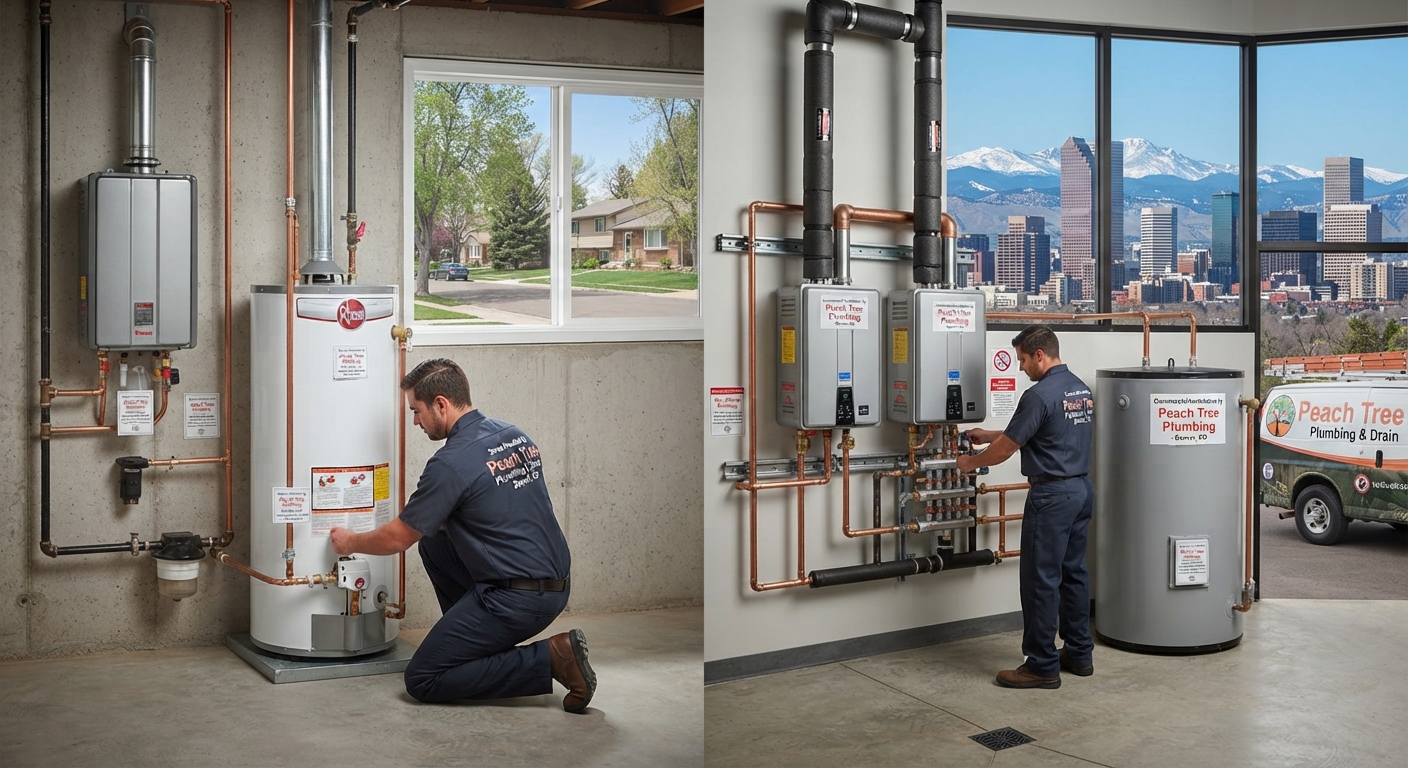
The Ultimate Guide to Water Heater Repair, Replacement, and Maintenance in Denver
Hot water is a non-negotiable necessity for residential comfort and commercial business operations alike. However, operating a water heating system in the Mile High City introduces unique challenges. From severe hard water mineral content to fluctuating winter temperatures, Denver's environment places extreme thermal and chemical stress on plumbing infrastructure.
Whether you manage a sprawling commercial facility requiring continuous heavy-duty hot water output or own a residential home dealing with a failing tank, understanding how your water heater functions—and how to protect it—is essential. This authoritative guide breaks down everything property owners need to know about water heater repair Denver CO solutions, covering gas and electric configurations, modern product options, critical maintenance requirements, and structural preservation.
1. Understanding Water Heater Products on the Market
Choosing the right water heating system depends heavily on your property type, energy availability, and daily volume demands. Modern engineering offers several distinct classes of water heaters:
Conventional Tank Water Heaters (Gas & Electric)
- How They Work: Traditional tank units store and continuously heat a preset volume of water (typically 40 to 80 gallons) to maintain a constant temperature ready for use.
- Gas vs. Electric: Gas storage tanks utilize a burner assembly and a central flue pipe, offering faster recovery times and lower operational costs in regions where natural gas is economical. Electric storage tanks rely on upper and lower electrical resistance heating elements controlled by individual thermostats. While generally easier to install, they often have slower recovery rates.
- Best Suited For: Standard residential homes and smaller commercial spaces with consistent, predictable hot water usage patterns.
Tankless Water Heaters (Gas & Electric)
- How They Work: Often referred to as on-demand water heaters, these units eliminate the storage tank entirely. When a hot water tap opens, powerful gas burners or electric heating elements rapidly activate, heating water as it flows through a high-efficiency heat exchanger.
- Gas vs. Electric: Gas tankless units deliver high flow rates capable of supporting multiple simultaneous fixtures (such as showers and dishwashers running together). Electric tankless models are compact and ideal for point-of-use applications (like a single remote bathroom or wet bar) but often lack the electrical amperage required to service an entire multi-bath home in colder climates.
- Best Suited For: Energy-conscious homeowners and high-demand commercial environments looking to save space and eliminate standby energy losses.
Commercial Heavy-Duty and Boilers Systems
- How They Work: Commercial properties—such as hotels, restaurants, and multi-family complexes—require high-capacity commercial-grade storage tanks, multi-unit rack systems, or indirect-fired boilers tied into building heating infrastructure. These systems are built for continuous, high-volume duty cycles under strict regulatory health codes.
2. Residential vs. Commercial Water Heating Demands
While the underlying thermodynamic principles remain identical, residential and commercial water heating applications differ significantly in scale, regulatory compliance, and operational wear.
- Residential Demands: Focus primarily on family-size comfort, energy efficiency, and space-saving layouts. Usage peaks are predictable (morning and evening routines).
- Commercial Demands: Focus on uninterrupted business continuity, compliance with health sanitation codes (such as commercial dishwasher sanitization temperatures of 180°F), and redundancy. A commercial failure halts business operations, making preventative diagnostics critical.
3. The Science of Destruction: Hard Water, Anode Rods, and Gasket Failure
Denver water is notoriously "hard," carrying heavy concentrations of dissolved minerals, primarily calcium and magnesium. If ignored, these minerals trigger a destructive chemical chain reaction throughout your entire plumbing system.
The Role of the Sacrificial Anode Rod
Inside every standard glass-lined storage tank is an anode rod—a steel core wire wrapped in aluminum, zinc, or magnesium. Because of electrochemical properties, corrosive minerals in the water attack the sacrificial anode rod instead of eating through the steel tank walls.
What Happens When Anode Rods and Flushes Are Neglected?
- Anode Depletion: Over 2 to 3 years, Denver's aggressive hard water completely consumes the sacrificial anode rod, leaving it a bare steel wire and passing that mineral along the water pipes to chew up the plastic and rubber gaskets and rust the fixtures.
- Tank and Fixture Corrosion: Once the anode rode is gone, corrosive minerals turn their focus to the tank's interior lining, fittings, and surrounding plumbing connections.
- Mineral Attack on Gaskets and O-Rings: As mineral-laden water circulates, micro-crystals deposit on rubber gaskets, valve seats, and fixture O-rings. Simultaneously, chemical imbalances accelerate galvanic corrosion between dissimilar metals (such as copper pipes threaded directly into steel tank nipples without dielectric unions). This causes rubber seals to dry out, warp, split, and disintegrate, resulting in insidious leaks at fixture connections, valve stems, and pipe joints across the entire building.
4. Why Wrapping a Tank Blanket Around a Water Heater Leads to Premature Rust
A common DIY energy-saving myth involves wrapping older storage water heaters in fiberglass insulation blankets. While intended to reduce heat loss, this practice frequently causes catastrophic damage:
- Trapped Moisture and Condensation: Gas water heaters constantly vent combustion gases through the central flue. Minor flue leaks or condensation cycles can become trapped underneath an unsealed insulation blanket.
- Accelerated Exterior Rust: This trapped moisture creates a micro-environment of continuous humidity directly against the exterior steel skin of the tank. Over time, this rusts out the structural metal jacket, compromises the structural integrity of the unit, and can completely rot out the base, leading to sudden tank failure. Modern water heaters feature thick, factory-installed foam insulation sandwiched between inner and outer walls, making external blankets obsolete and hazardous.
5. Routine Preventative Maintenance Procedures
Protecting your water heating investment requires a disciplined maintenance schedule executed annually:
- Annual Tank Flushing: Shut off power or gas to the unit, attach a garden hose to the bottom drain valve, and flush out accumulated mineral sediment until the water runs completely clear.
- Anode Rod Inspection & Replacement: Inspect the anode rod every 2 years. If more than 6 inches of the steel core wire is exposed or the rod is heavily pitted (chewed up with rust), replace it immediately to extend your tank's life by an extra decade.
- Temperature & Pressure (T&P) Relief Valve Test: Lift the test lever on the T&P valve briefly to ensure water discharges freely and the valve snaps shut tightly. If it drips afterward, replace it.
- Tankless Descaling: For tankless units, circulate a food-grade virgin white vinegar solution through the heat exchanger using a portable service pump every 12 to 18 months to dissolve scale buildup.
6. What Clients Ask Businesses Most Frequently
Property owners frequently contact professional plumbers with specific concerns regarding water heater operations. Here are the top questions clients bring to Google and our expert responses:
Q1: Why is my water heater making a loud popping or rumbling noise?
- The Client's Concern: Homeowners often fear the tank is about to explode.
- The Reality & Solution: This noise is caused by hard water mineral sediment settling at the bottom of the tank. As the burner heats the water from below, trapped water beneath the sediment layer boils instantly, creating steam bubbles that burst upward through the sludge ("scale boiling"). While not an immediate explosion risk, it destroys heating efficiency and overheats the steel bottom. A professional flush can help, but heavy scaling usually requires tank replacement.
Q2: Is it better to repair an aging water heater or replace it entirely?
- The Client's Concern: Trying to avoid the heavy cost of a new installation versus throwing money at constant repairs.
- The Reality & Solution: As a general rule of thumb, if your storage tank is over 8 to 10 years old (or 15 to 20 years for certain tankless units) and suffers a major component failure—such as a leaking tank shell or failed gas control valve—replacement is far more cost-effective than repair. Repairing minor electrical elements or thermostats on newer units is usually worthwhile.
Q3: Why do I keep running out of hot water so quickly?
- The Client's Concern: Sudden drops in comfort during showers or family routines.
- The Reality & Solution: In traditional tanks, this is typically caused by a broken dip tube (which forces cold incoming water to mix at the top instead of staying at the bottom), a failed lower heating element in electric units, or severe sediment reduction of tank capacity. In commercial settings, it usually points to scaling or inadequate system sizing for increased business demand.
Q4: Can I install a tankless water heater where my old standard gas tank used to be?
- The Client's Concern: Wondering about structural and mechanical compatibility during an upgrade.
- The Reality & Solution: Not always without modifications. Tankless units require significantly higher BTU gas inputs, which often means upgrading existing small-diameter gas supply lines to a larger size. They also require specialized stainless steel or PVC venting and a dedicated 120V electrical connection for internal control boards and blowers.
Q5: What immediate steps should I take if my water heater starts leaking?
- The Client's Concern: Panic over impending property flood damage.
- The Reality & Solution: First, locate and close the cold water supply shut-off valve directly above the water heater to stop incoming water flow. Second, turn off the power supply at the circuit breaker (for electric units) or turn the gas control valve to the "OFF" position (for gas units). Finally, call an emergency professional for immediate evaluation.