Emergency Plumbing Denver CO: Your Guide to 24/7 Professional Solutions
When a pipe bursts at 2:00 AM or your commercial kitchen drains clog on a holiday weekend, you don’t need excuses—you need a solution. In Denver, the unique combination of high altitude, fluctuating temperatures, and aging infrastructure makes emergency plumbing services a critical necessity for property owners.
1. Most Demanded After-Hours Plumbing Tasks
Emergency plumbing isn't just about leaks; it’s about restoring safety and function to your property immediately. Here are the most common calls we receive after standard business hours:
- Burst Pipe Repairs: Often caused by localized freezing or sudden pressure fluctuations, these require immediate shut-off and repair to prevent structural water damage.
- Main Sewer Line Backups: A nightmare scenario for any home or business, often signaled by sewage backing up into toilets or floor drains.
- Water Heater Failures: Whether it’s a tankless unit or a traditional heater, losing hot water in Denver’s cold climate is an immediate emergency for many families.
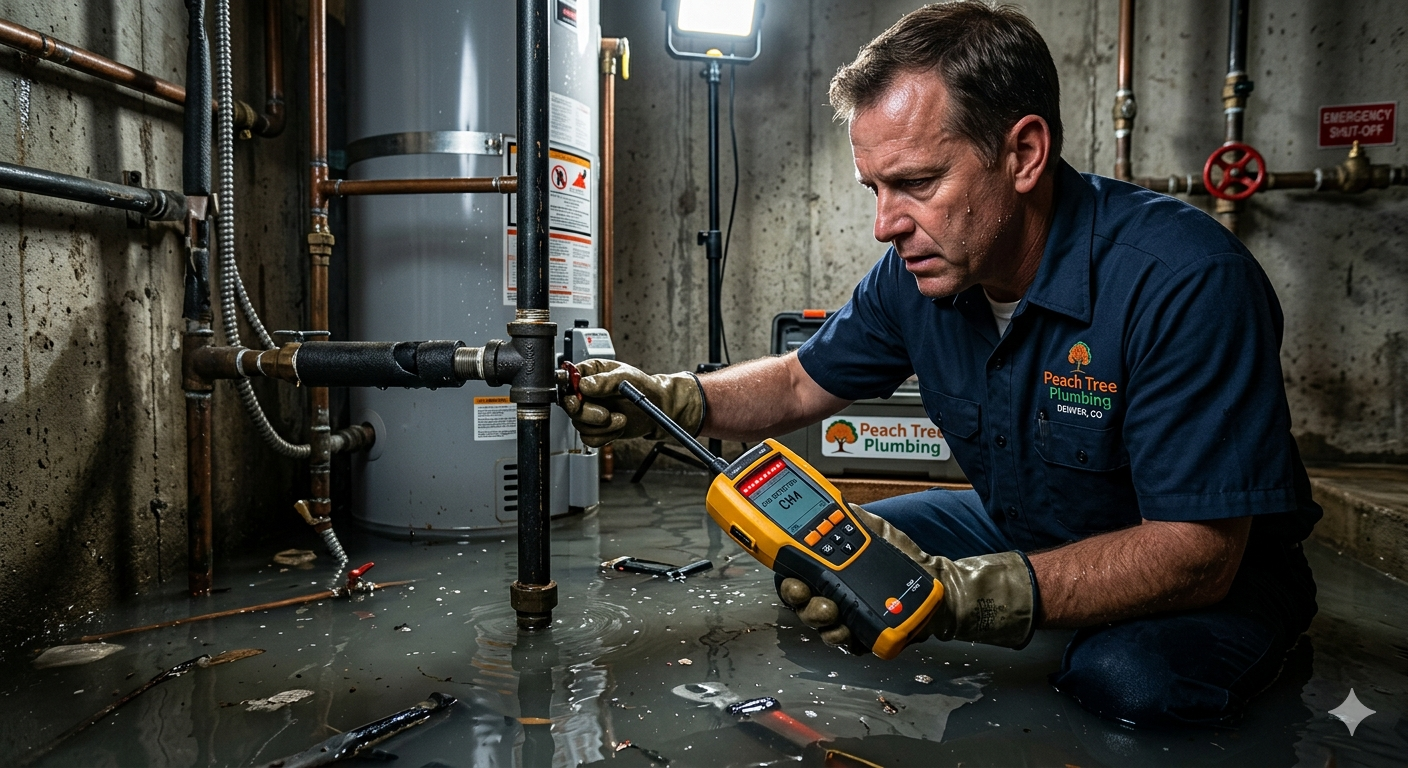
- Gas Line Leaks: These are non-negotiable emergencies that require professional detection and immediate mitigation to ensure safety.
- Commercial Kitchen Drain Clogs: Restaurants rely on continuous flow; a total clog during a dinner rush requires immediate professional intervention.
2. Serving the Denver Metropolitan Area
Our team is constantly moving across the region. We are highly active in:
- Denver Proper: Including LoDo, Highlands, and Wash Park.
- Suburban Growth Corridors: Aurora, Lakewood, and Westminster.
- Expanding Hubs: Broomfield, Erie, Superior, and Northglenn.
- Southern Metro: Centennial, Parker, Castle Rock, and Littleton.
3. Seasonal Impacts: Spring & Summer in Denver
Plumbing is deeply affected by the seasonal shift. While winter gets the most attention for freezing, the transition to spring and summer introduces new challenges:
The Spring Thaw
As Denver warms up, the ground shifts. This movement can put immense pressure on underground piping, leading to cracks in sewer lines that were dormant all winter. We often see an influx of calls regarding "slow drains" that turn into full-scale main line obstructions once the soil settles.
The Summer Surge
Summer in Denver brings increased water usage. With irrigation systems coming online and high-frequency use of appliances like ice makers and outdoor spigots, the strain on your home’s pressure regulator (PRV) is significant. A failing PRV often leads to the high-pressure surges that cause faucet leaks and pipe joints to fail.
4. Proactive Maintenance Tips
Don't wait for a leak to show up on your monthly bill or worse, a flood. Our team recommends a bi-annual checkup to coincide with the shift from winter to spring. This includes checking outdoor faucets for leaks caused by winter damage and inspecting your sump pump for the upcoming summer storms.
Conclusion: Partner with Peach Tree Plumbing
Emergency plumbing is about more than just tools—it’s about experience, speed, and knowing the local codes. Peach Tree Plumbing is available to help you navigate these unexpected crises.
Don't wait until the water is ankle-deep. Contact Peach Tree Plumbing today for emergency service or to schedule your seasonal maintenance.